Chur: Switzerland’s oldest town, which welcomes visitors in three languages and serves up a feast under the watchful eye of Calanda
📍 Chur – the Old Town and Cathedral Hill
You step off the train, take a few steps onto the sun-warmed square and look up. Above the station, like a gigantic curtain, a wooded hillside rises up. A solitary cloud has become caught on its summit, as if someone had forgotten to take it off the hanger. This is how Chur, the capital of Graubünden, welcomed us – a city that proudly calls itself the oldest in Switzerland. Traces of settlement here date back several thousand years. After the misty Braunwald, this blue sky was like a burst of energy.
A canton outlined in red
Before we’d even set off towards the old town, we were stopped by an installation in the square in front of the station. Look at that red, twisted line suspended in the air. It’s the outline of Graubünden, Switzerland’s largest canton, made up of hundreds of valleys. People walked beneath it with their rucksacks, paying it no mind, whilst we stood with our heads tilted back, trying to spot on this ‘map’ the places we’d already been to.
A few metres further on, another surprise awaited us: a massive, ancient tree with rust-coloured, fibrous bark, looking like a sequoia. Its trunk is so thick that a person standing next to it looks like a figurine from a model, and bicycles are tightly locked all around it. Nature and everyday life in a single frame.
Flags, cobblestones and a bronze boy
The main shopping street is a Swiss postcard in its purest form. Pastel-coloured townhouses, flags fluttering overhead bearing a white cross and the cantonal coat of arms of the canton of Graubünden, and in the background, the same green wall of mountains. On the way, we pass a bronze sculpture of a boy standing on a wooden sledge, the tails of his coat spread out. It’s almost as if he’s about to hurtle straight into the crowd of passers-by.
In a small square stands a huge turquoise fountain basin, marked with red streaks. The water inside reflects the sky and the buildings, and as the sun sets, the whole scene looks like a work of contemporary art plonked into a medieval alleyway. Of course, we couldn’t leave without a souvenir photo.
Up the hill, to the bishop’s palace
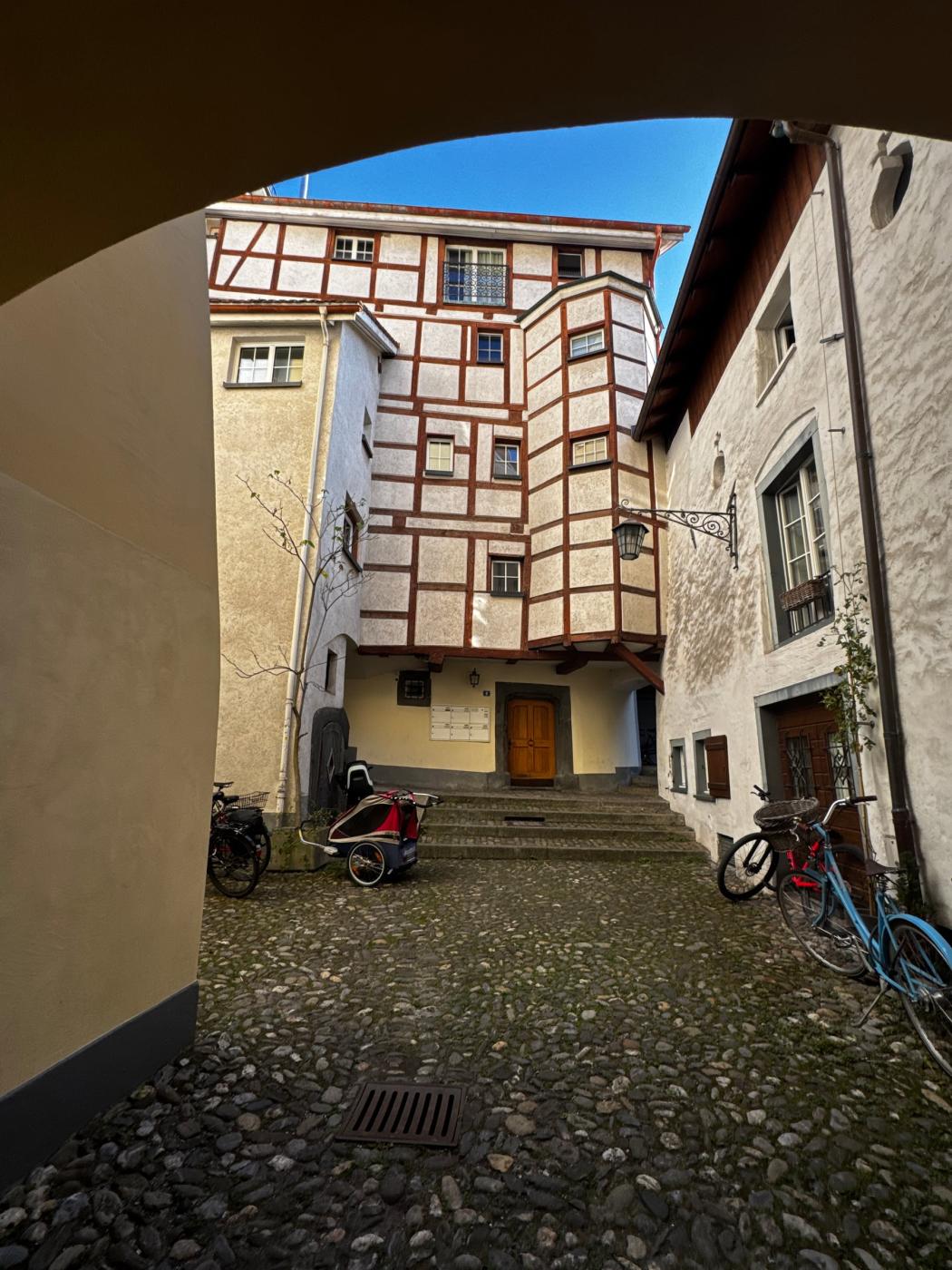
Alleyways steeped in history. The higher we go, the quieter it gets. We pass through the archway and suddenly find ourselves in a small courtyard paved with cobblestones. Before us stands a townhouse with a half-timbered bay window, red beams against pale plaster, and bicycles leaning against the walls. Close your eyes for a moment and listen: instead of the bustle of the street, there’s only the echo of footsteps and a distant bell.
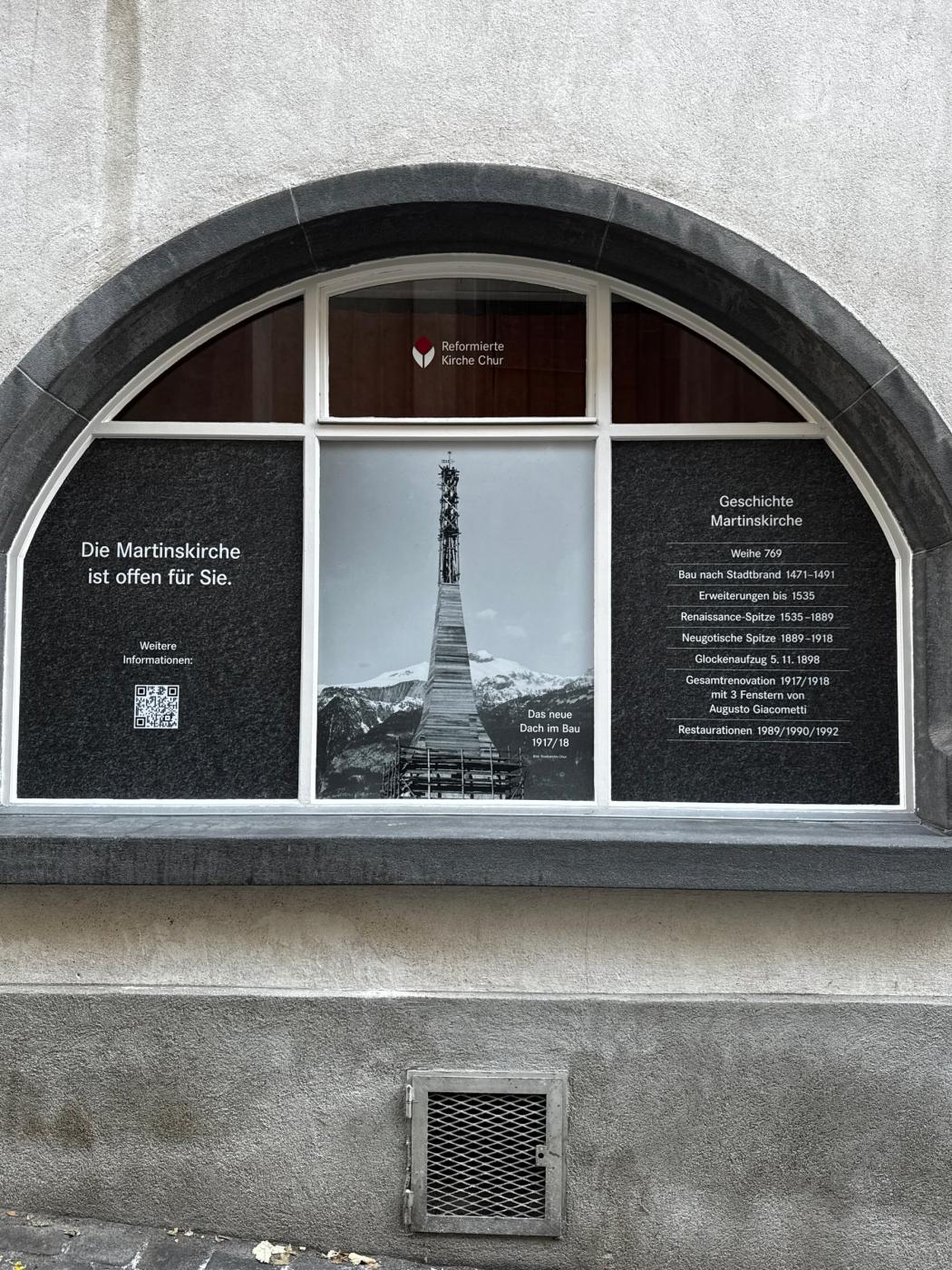
Near St Martin’s Church, we were drawn to a display case recounting its history. Consecrated in 769, it was rebuilt after the great fire of the city between 1471 and 1491, and acquired its neo-Gothic spire at the turn of the 19th and 20th centuries. Inside are stained-glass windows by Augusto Giacometti – one of those details that make it worth returning for.
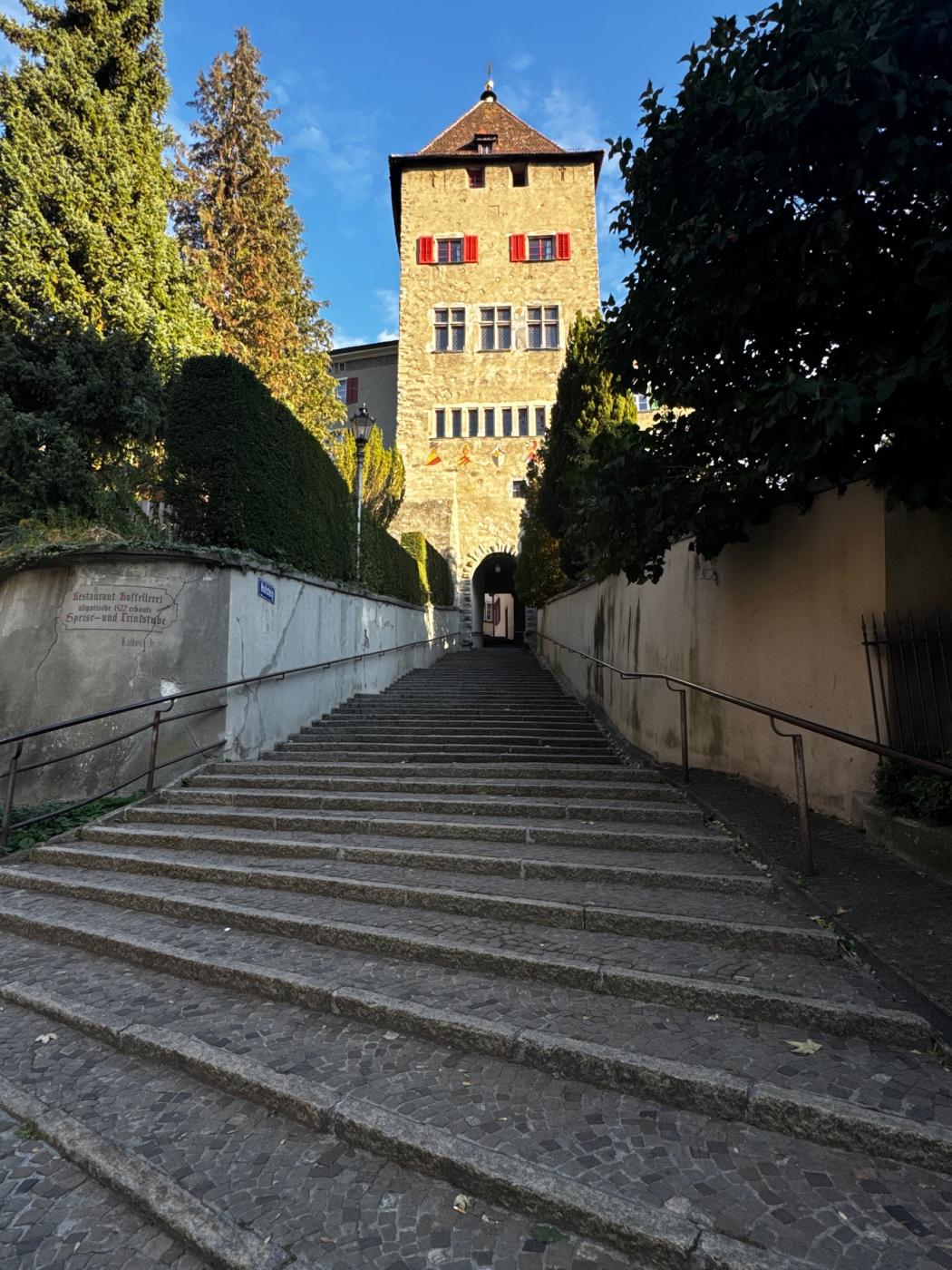
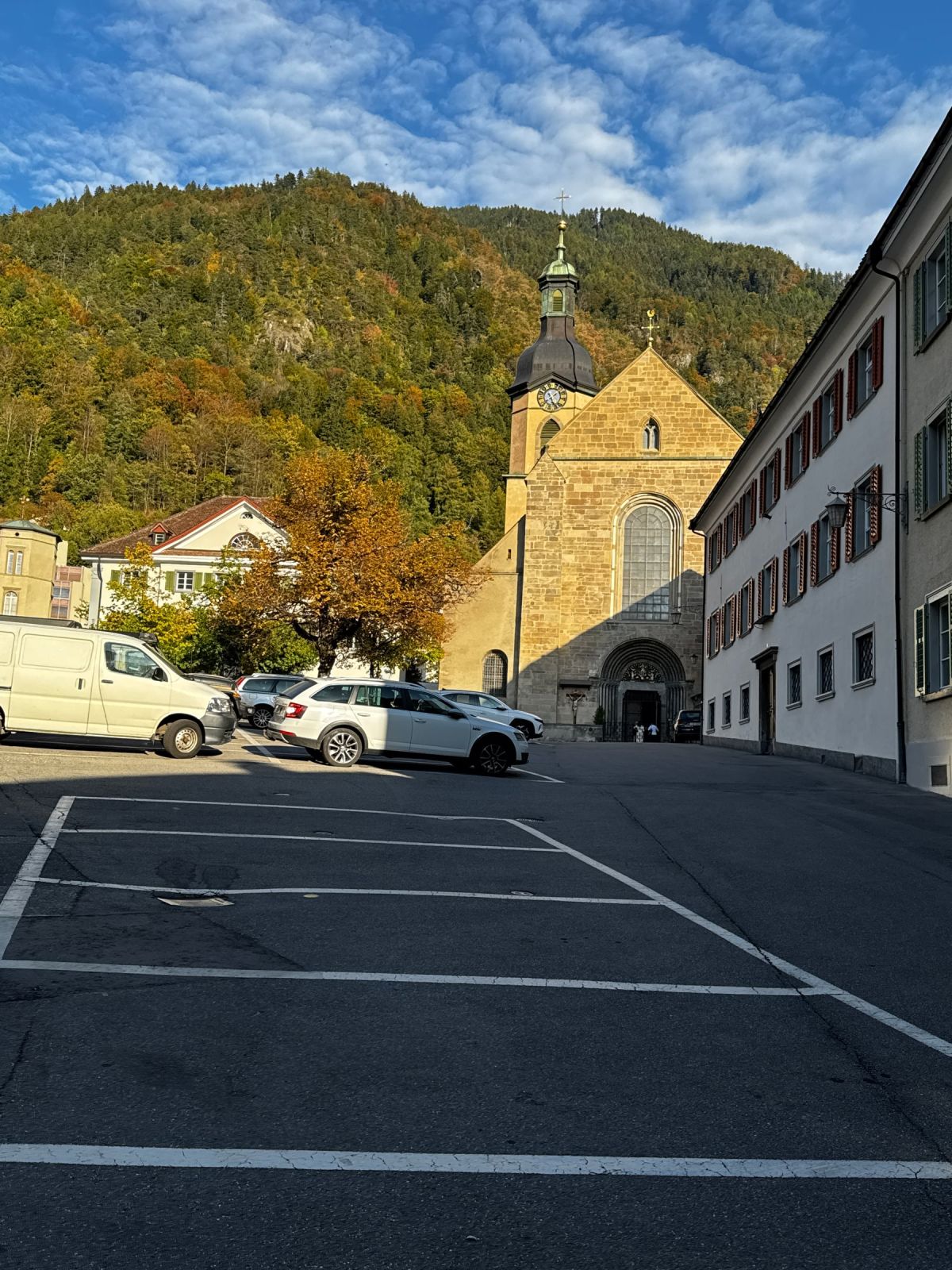
Then there are just the steep, stone steps leading up to the gate tower with its red shutters. On the wall is an inscription about the Hofkellerei, and beyond the gate lies the cathedral hill. The cathedral, built of light-coloured stone, rises against the backdrop of a hillside which, in October, has taken on shades of rust, gold and bottle-green. In the entrance hall of one of the buildings, we’re greeted by an inscription that best sums up Graubünden: willkommen – bainvegni – benvenuti. In German, Romansh and Italian. The three languages of a single canton.
“Restaurant Hofkellerei – Gotische Trinkstube von 1522”
– a Gothic drinking hall dating from 1522. It sounds like an invitation that’s hard to turn down.
Calanda in a glass
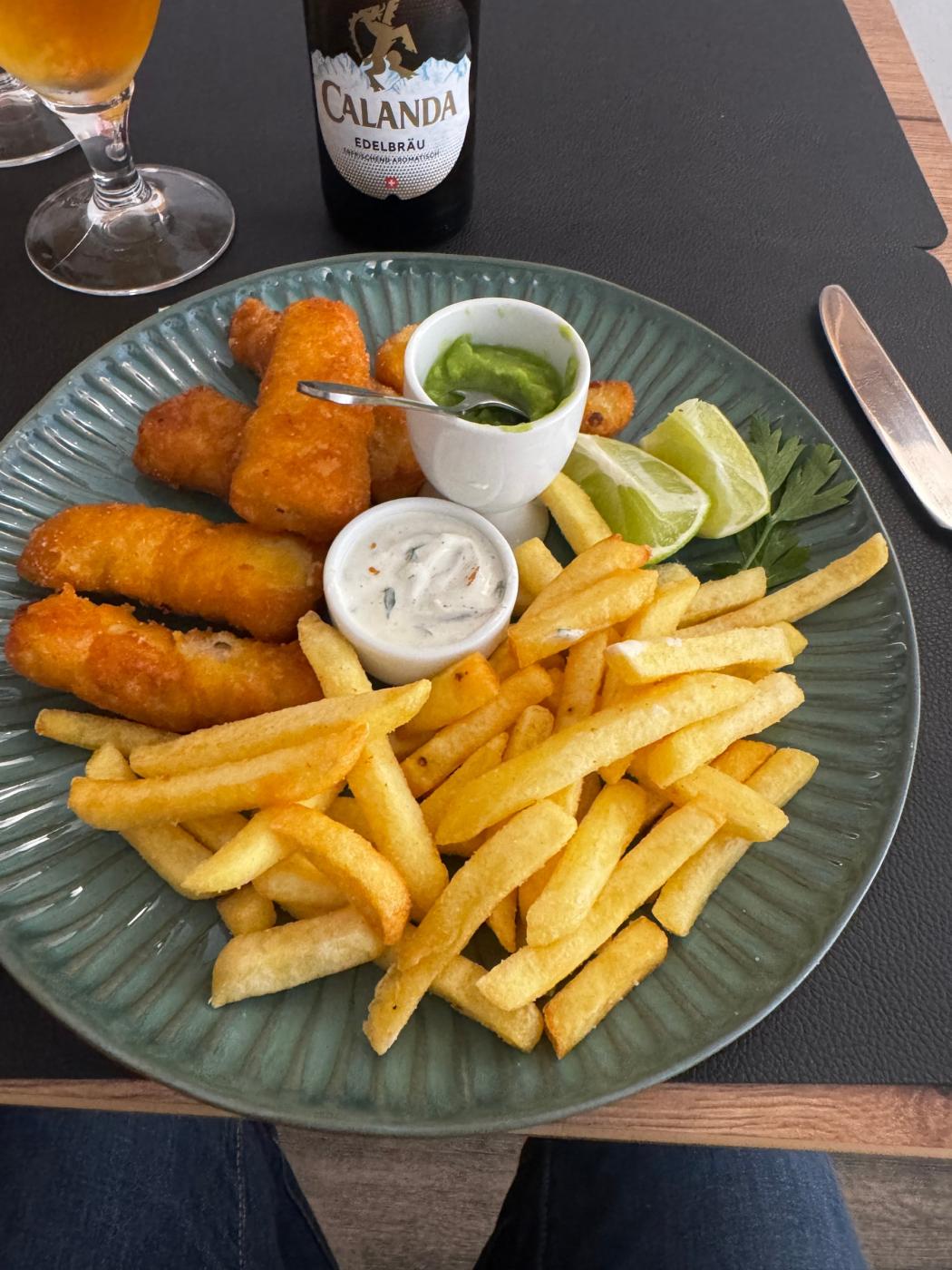
We ended our descent at a table. On our plates were crispy croquettes with a colourful salad of strawberries and cherry tomatoes, and golden pieces of fish with chips, lime and two sauces. And, of course, Calanda – a beer brewed right here in Chur, named after the mountain range towering over the town. You drink it whilst gazing at the mountains from which it takes its name. It’s hard to imagine a better finale.
Chur is usually treated as a stopover on the way deeper into the Alps. We spent barely an hour and a half here, but it was enough to realise that this was a mistake. And ahead of us lay the road towards the Engadine and Samedan.
🧭 Next stages of this trip
This isn't the end — see what happened next
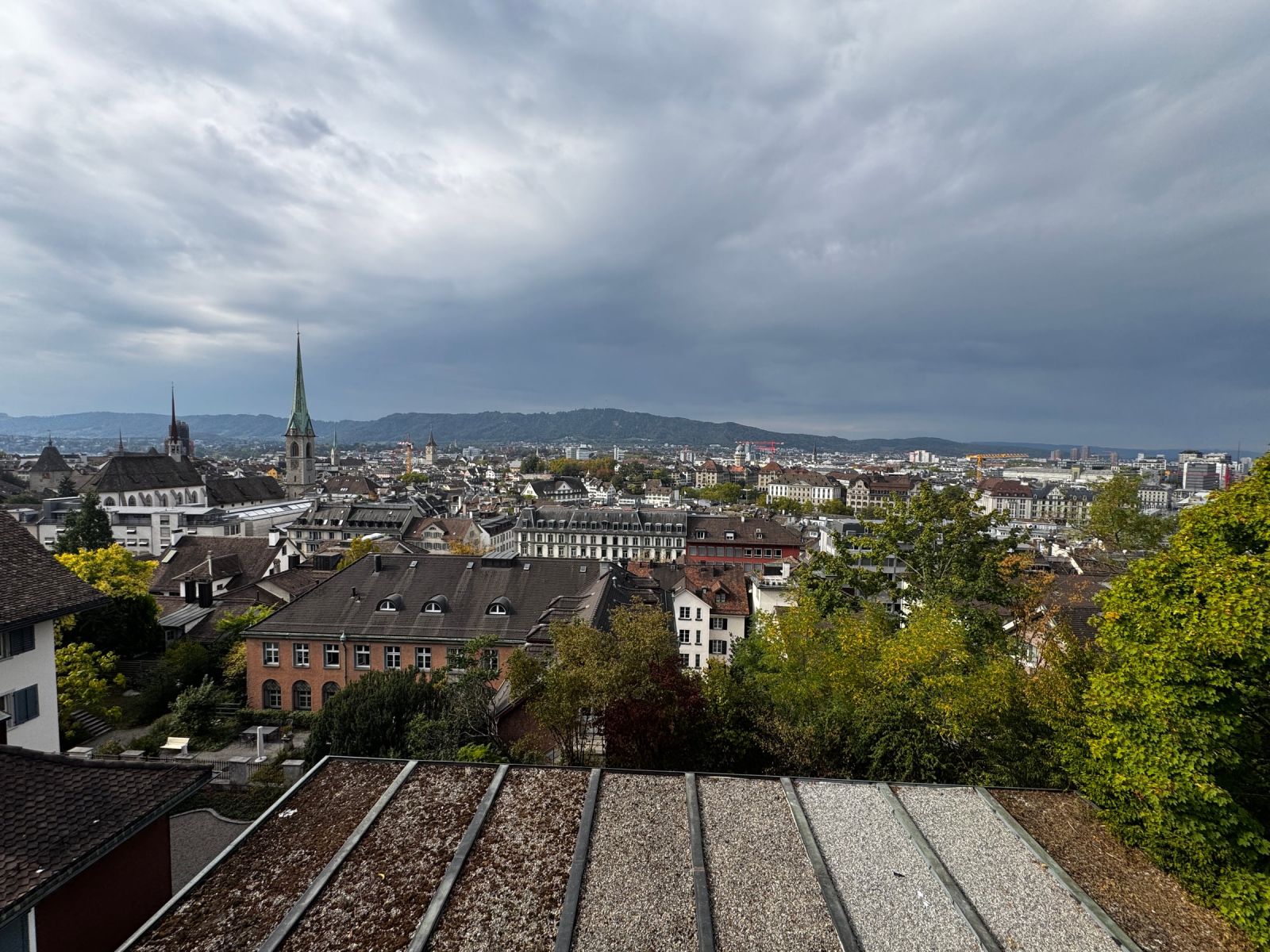
Zurich in a single breath: from the night sky straight into the heart of Switzerland
📍 Zurich – Polyterrasse, the Swiss National Museum and Bahnhofstrasse
👀 352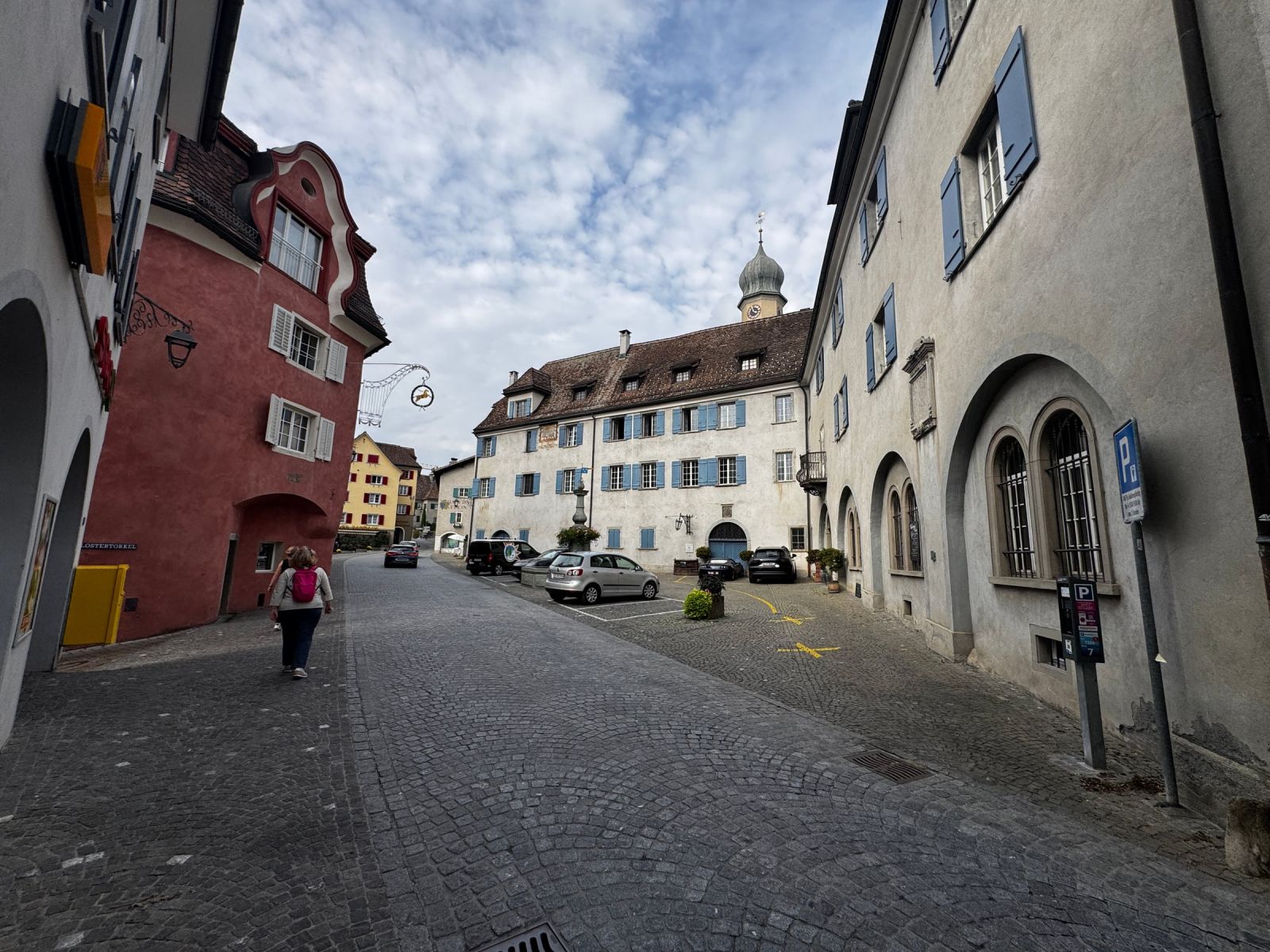
Maienfeld: Where wine matures beneath a beam dating from 1658, and grapes are transported by tractor through the market square
📍 Maienfeld – Salenegg Castle
👀 242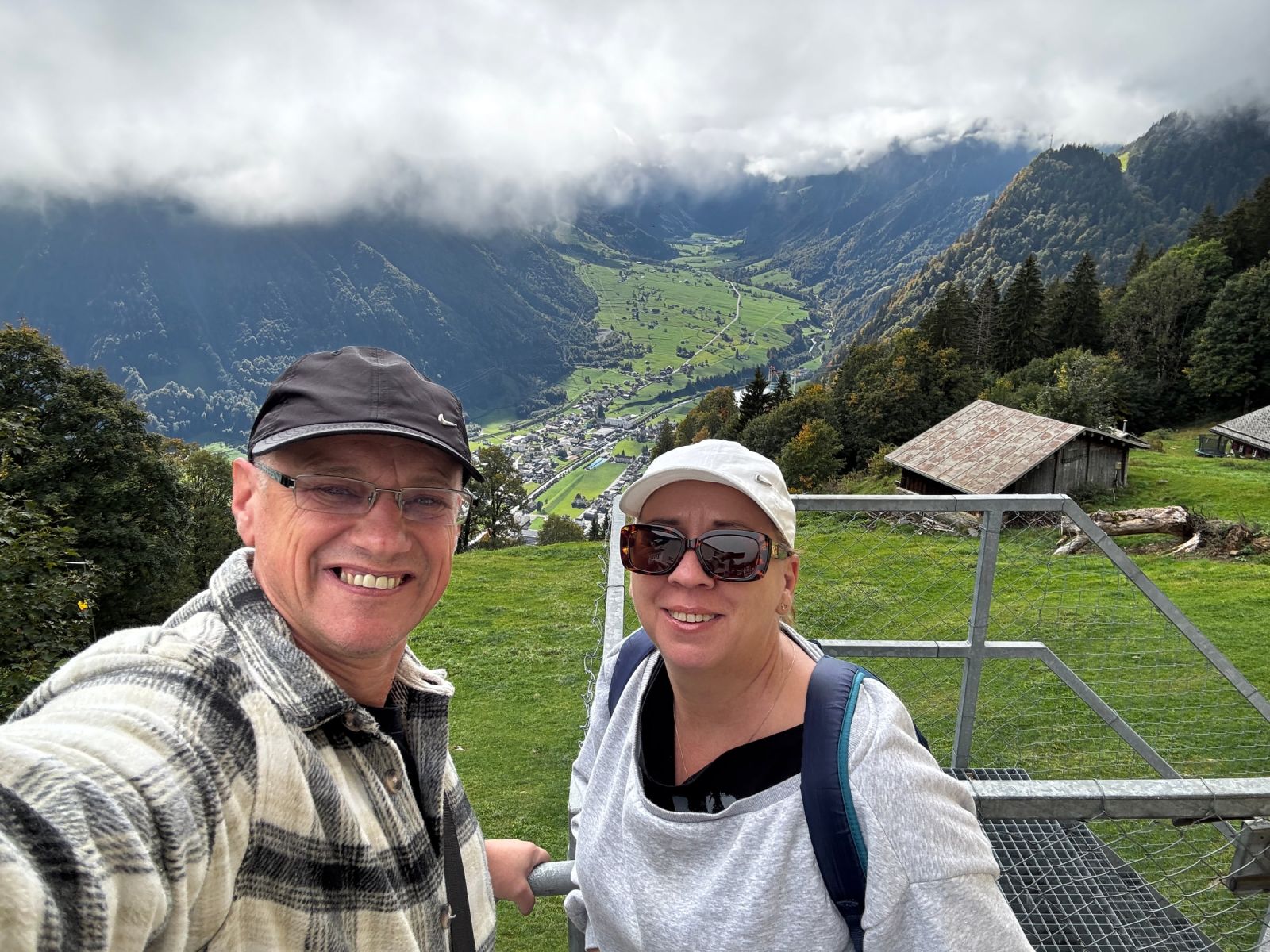
Braunwald: A car-free village where you drive straight into the clouds
📍 Linthal – Braunwald, Canton of Glarus
👀 246
Chur: Switzerland’s oldest town, which welcomes visitors in three languages and serves up a feast under the watchful eye of Calanda
📍 Chur – the Old Town and Cathedral Hill
👀 117
St. Moritz and the Bernina Express: From glaciers to the Italian sun in a single day
📍 St. Moritz – Bernina Express
👀 182