Braunwald: A car-free village where you drive straight into the clouds
📍 Linthal – Braunwald, Canton of Glarus
Imagine a morning when the sky is so blue it stings your eyes, and a single, gigantic cloud hangs over the green valley, clinging to the rock face like cotton wool to a stick. We were sitting on a train travelling deep into the canton of Glarus, our noses pressed against the window, and none of us uttered a word. Outside the window, the meadows were so lush they looked as if they’d been retouched, and above them loomed limestone cliffs that grew ever higher with every kilometre.
The end of the tracks, the start of the adventure
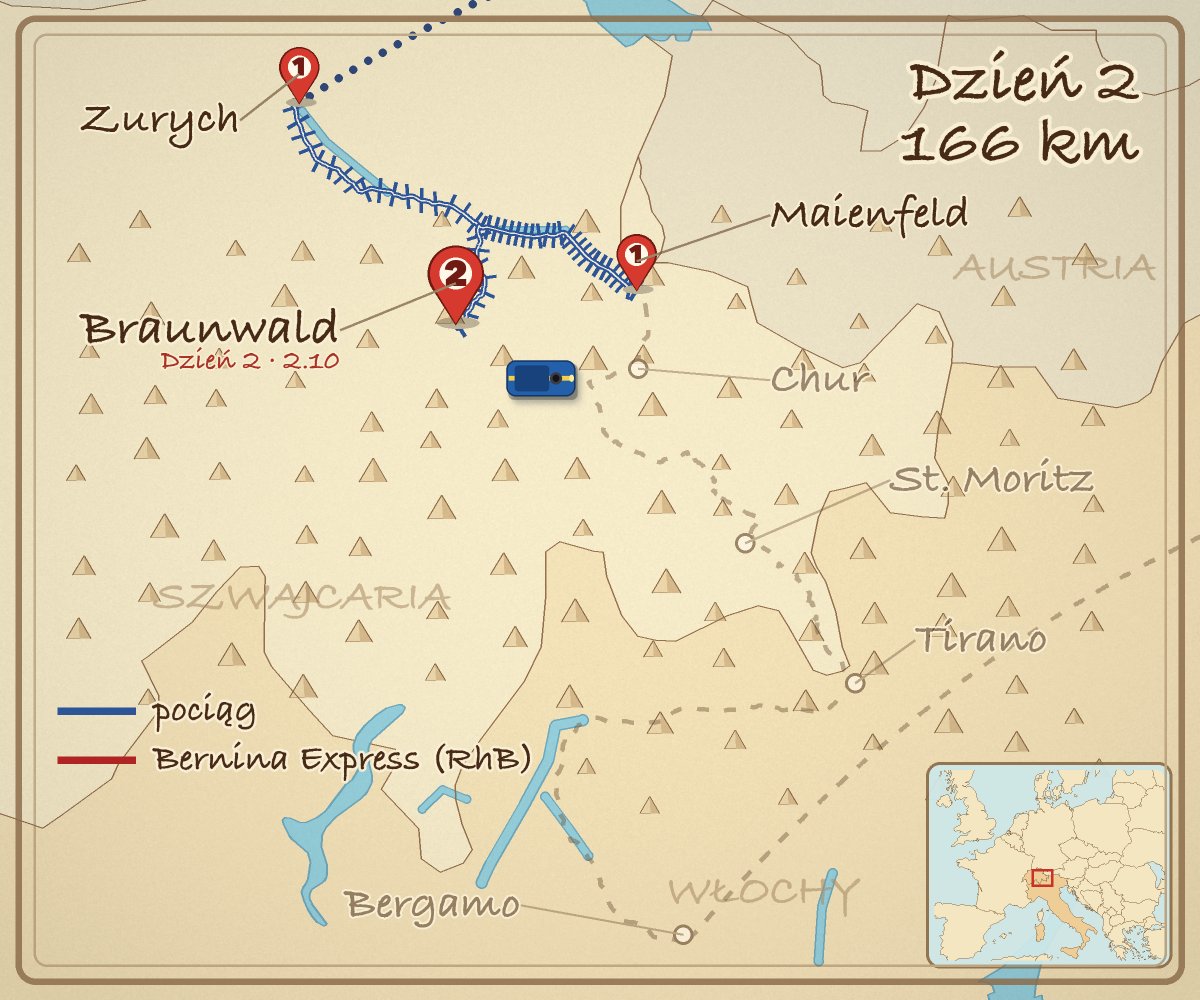
The red-and-navy double-decker S25 train took us to the very end of the valley, to Linthal. Beyond that, the tracks end, and the valley is closed off by a mighty massif, where the Tödi – the highest peak in the Glarus Alps – is hidden somewhere in the clouds. On the platform, we were greeted by crisp, clean air and the scent of wet grass. Look up: against the backdrop of an autumnal, golden-green hillside, a narrow thread of rails winds its way up. This is our route to Braunwald.
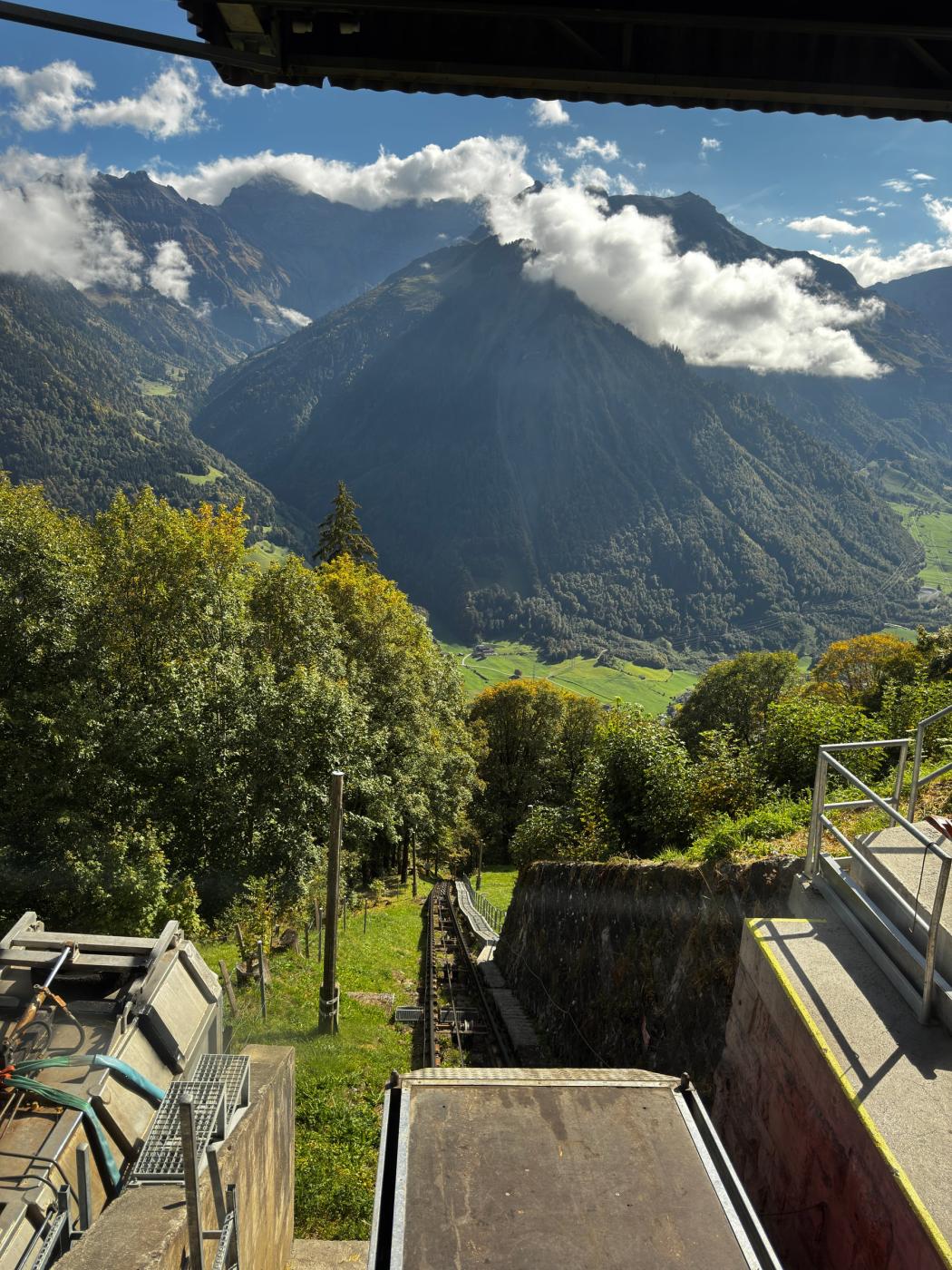
Braunwald is a village you cannot reach by car. No exhaust fumes, no car horns. The only way to get there (apart from on foot) is by the funicular railway, which since 1907 has been whisking people from the valley floor up to a sunny terrace at an altitude of around 1,250 metres. Over six hundred metres of elevation gain in just a few minutes.
Stairs leading to the sky
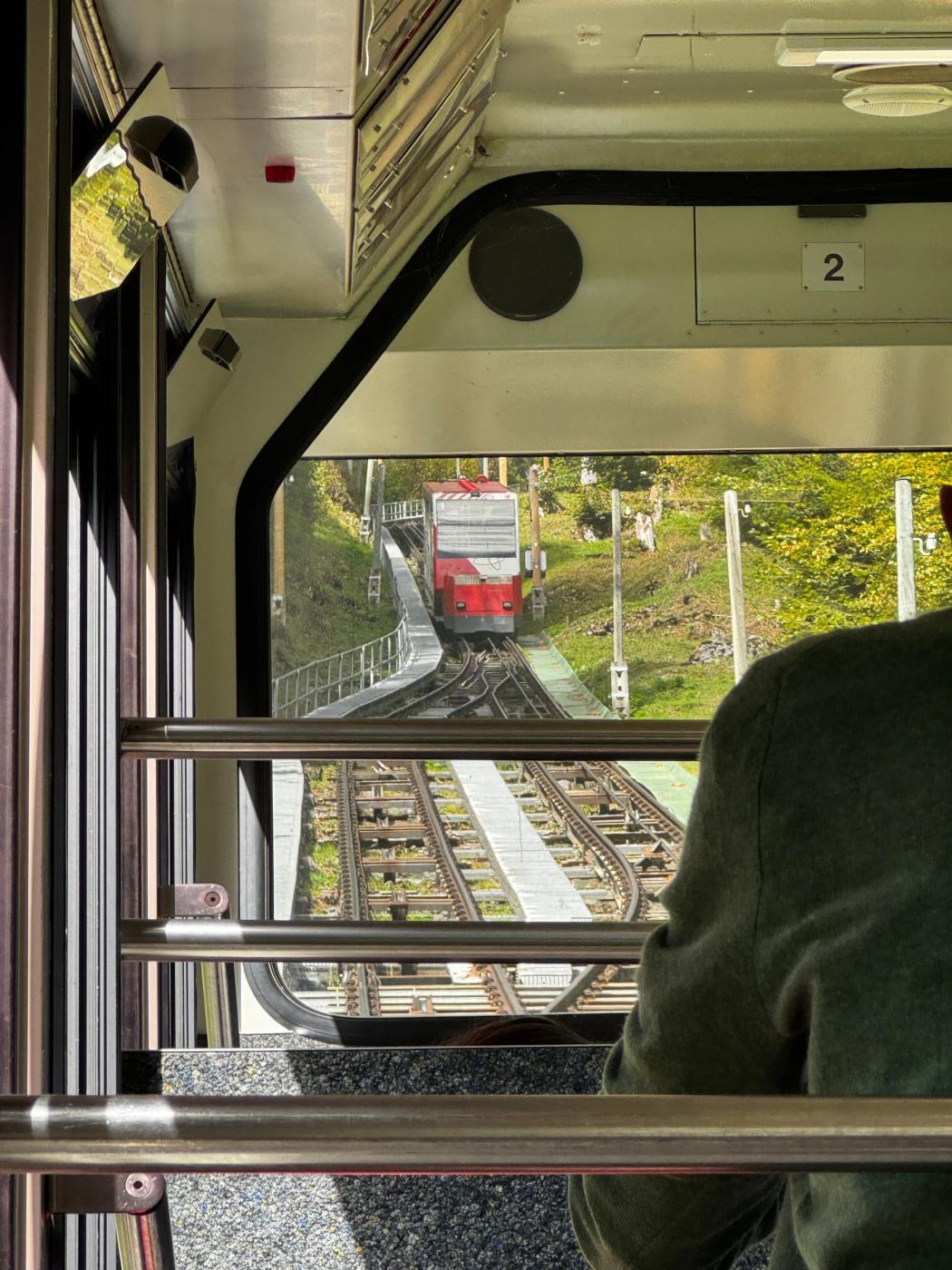
A carriage like a stepped waiting room. You board via steps, as the whole carriage is built like an amphitheatre – each compartment slightly higher than the last. We sit right at the front, and before us stretches a view that makes you feel a little queasy: the tracks climb at an angle more suited to a fairground rollercoaster than to a form of public transport. Halfway along the route, at a passing loop, a red twin of our carriage comes hurtling down from above. It passes us so closely that you can almost see your own face reflected in its windows.
And then something magical happens. The sun, which had been scorching the backs of our necks down in the valley, begins to fade. We’re heading straight into the clouds.
A terrace overlooking the valley
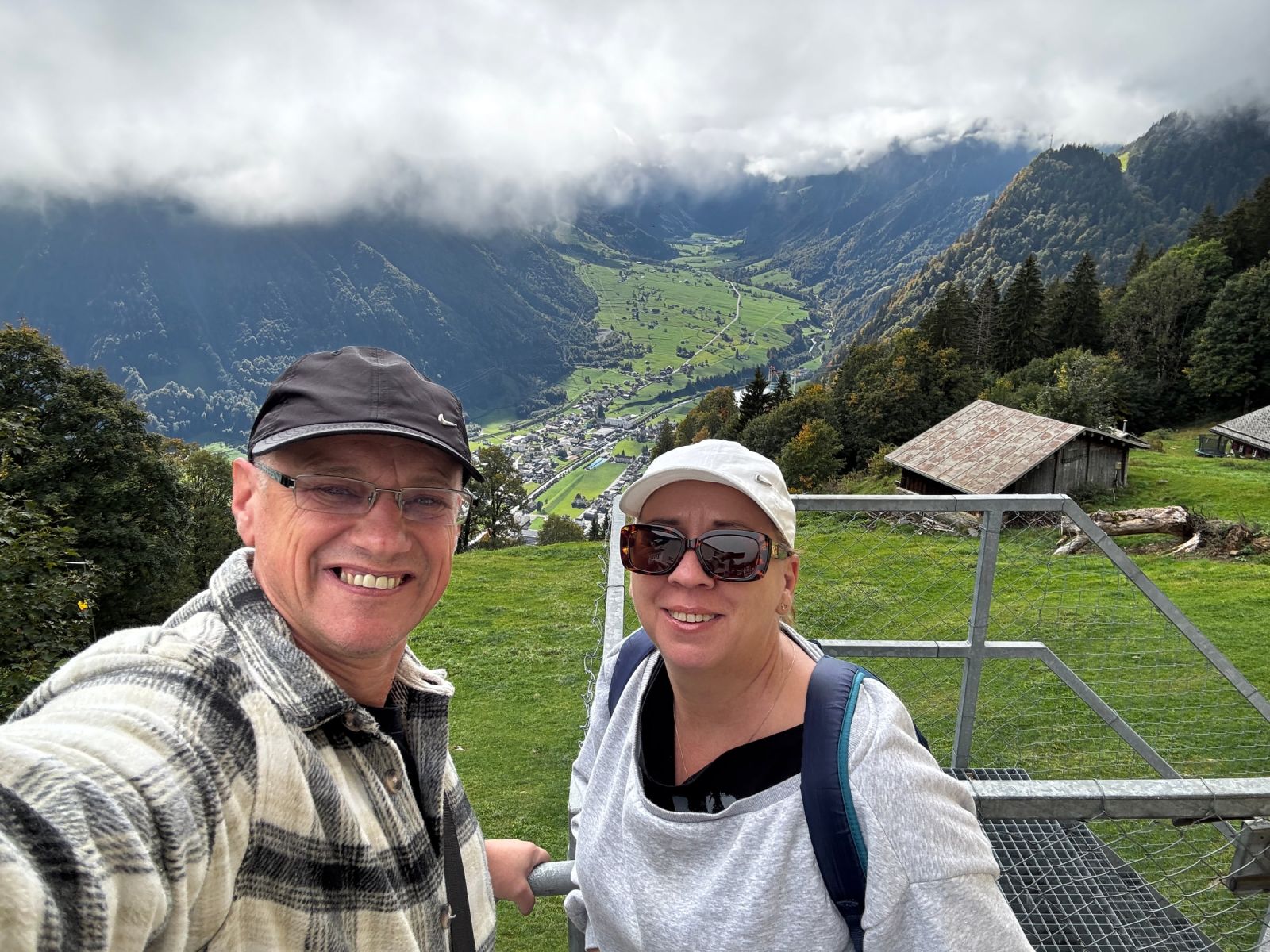
Up on the mountain, the air is damp and cool, and the spruce trees behind the station are shrouded in a milky mist. A few steps further on, the mist suddenly parts and… we fell silent. Below us, as if on a model, the entire Linth Valley spreads out: the colourful roofs of Linthal, a ribbon of road, a chequerboard of meadows and the dark, steep mountain faces, over which a blanket of clouds descends from above.
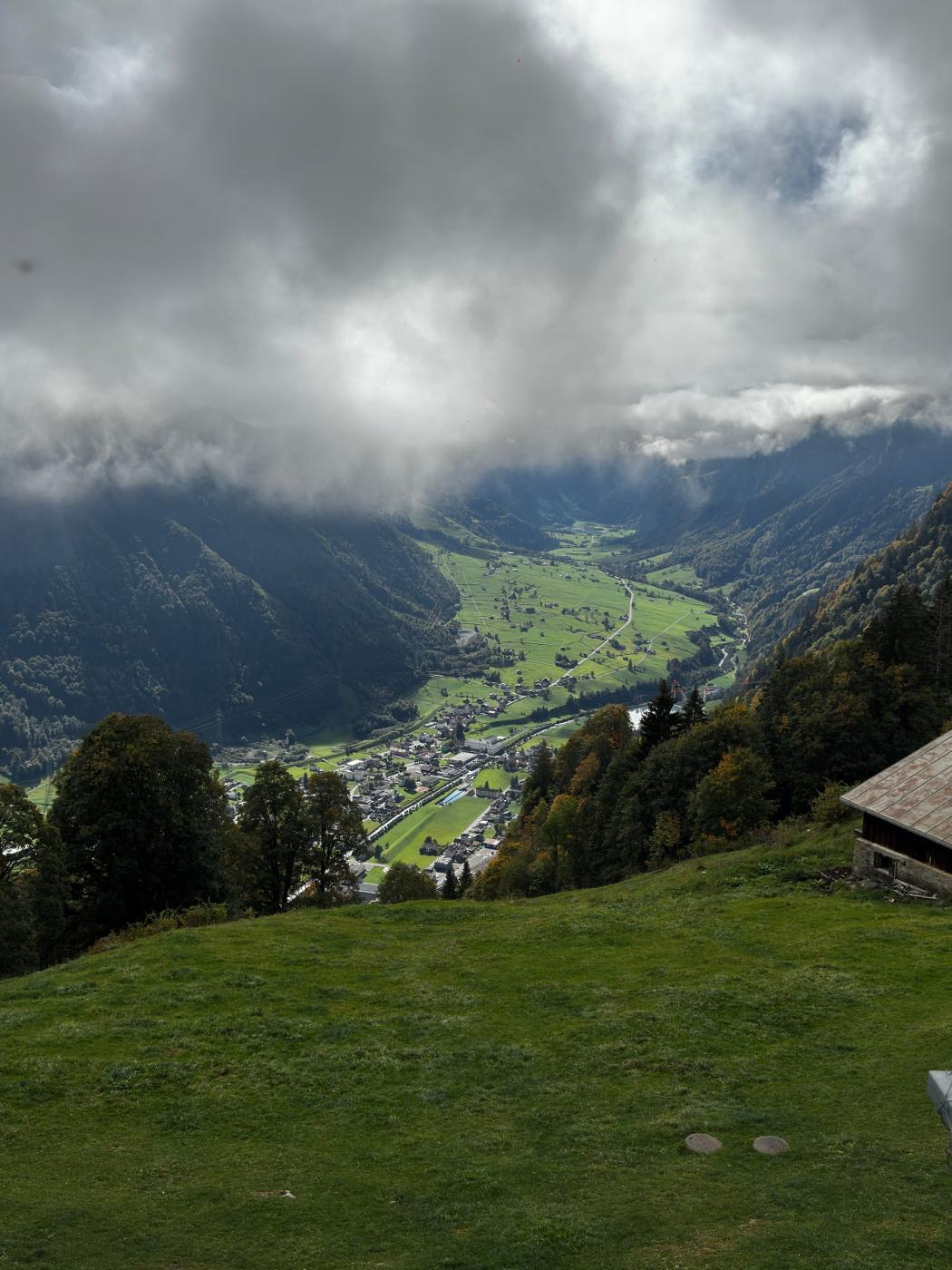
Beside us were wooden sheds with moss-covered roofs, cow pastures sloping steeply downwards, and a sign with a panoramic illustration on which every peak had its own name. The problem was that the real peaks were playing hide-and-seek with us. The clouds rolled across the slopes so quickly that the view changed every minute – one moment they revealed a jagged ridge, the next they obscured everything except the treetops.
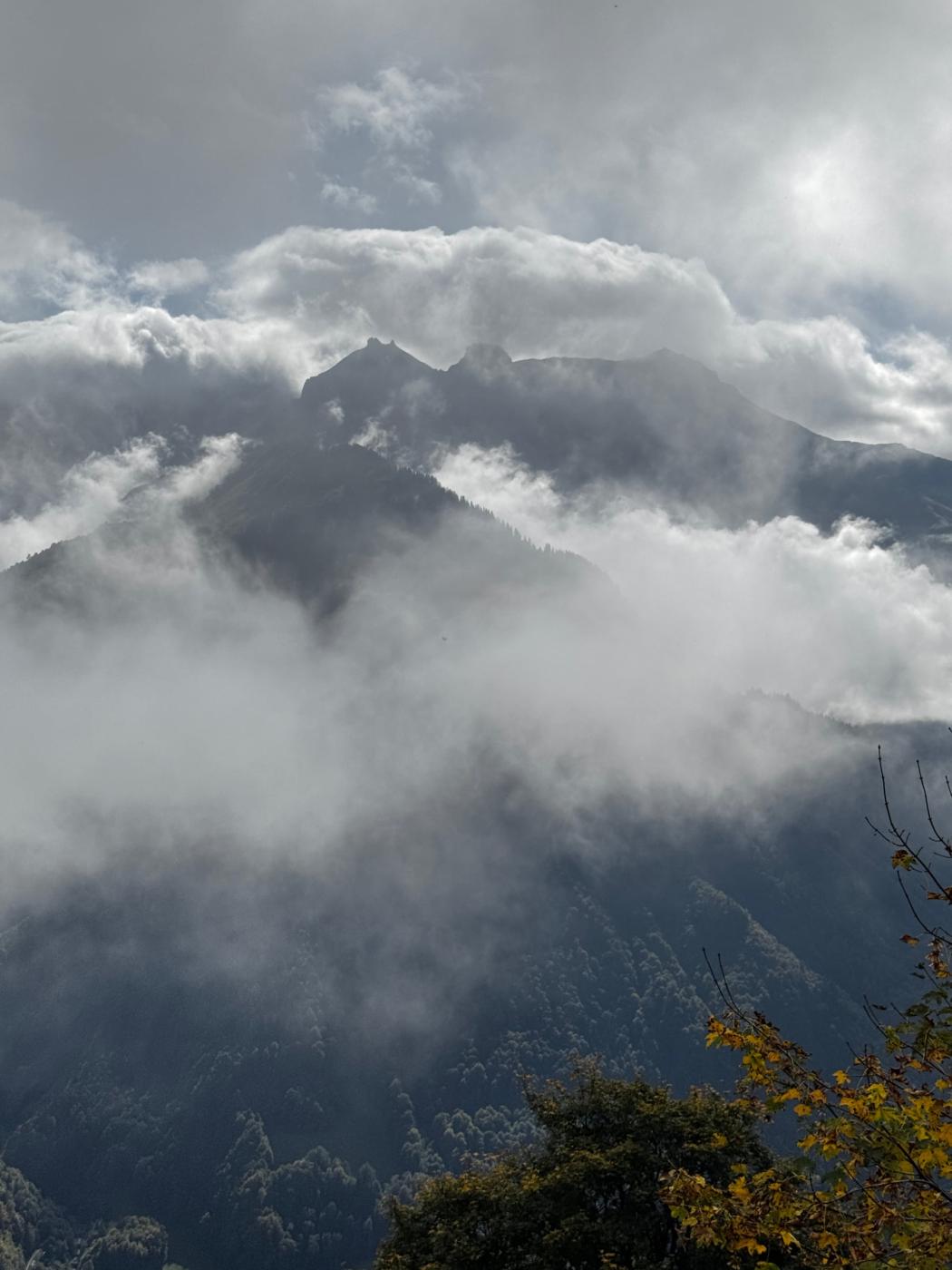
Close your eyes for a moment and listen. There’s no hum of engines here. There’s just the dripping of water from the branches, a cowbell ringing somewhere in the distance, and our own, slightly quickened breaths. This is what a car-free village sounds like.
The mountains are changing too. Braunwald isn’t an open-air museum. Just beyond the village, we came across a building site: skid pans, piles of stones, fallen tree trunks and a new cable car pylon that vanished into the clouds. The local lifts go higher, towards the scenic routes, and you can see just how much effort it takes to maintain the infrastructure in such steep terrain.
A beer with a view and back into the sunshine
The mist and damp had taken their toll – we deserved a break. We sat down in a cosy café full of books and old photographs on the walls, with a cold beer, laughing that we’d gone on a scenic trip but had spent half the time looking at the clouds from the inside.
The descent was like a reward. As the cable car began its descent, the clouds parted, and a sharp, sun-drenched panorama of the mountains and the green valley floor opened up before us. The very same view that had been obscured that morning now revealed itself in all its splendour.
The afternoon train carried us on, along the turquoise expanse of Lake Walensee, above which the vertical walls of the Churfirsten still bore white caps of cloud. Braunwald lay behind us – quiet, misty and a little mysterious. But you know what? It’s precisely because of that mist that we’ll remember it for the longest time.
🧭 Next stages of this trip
This isn't the end — see what happened next
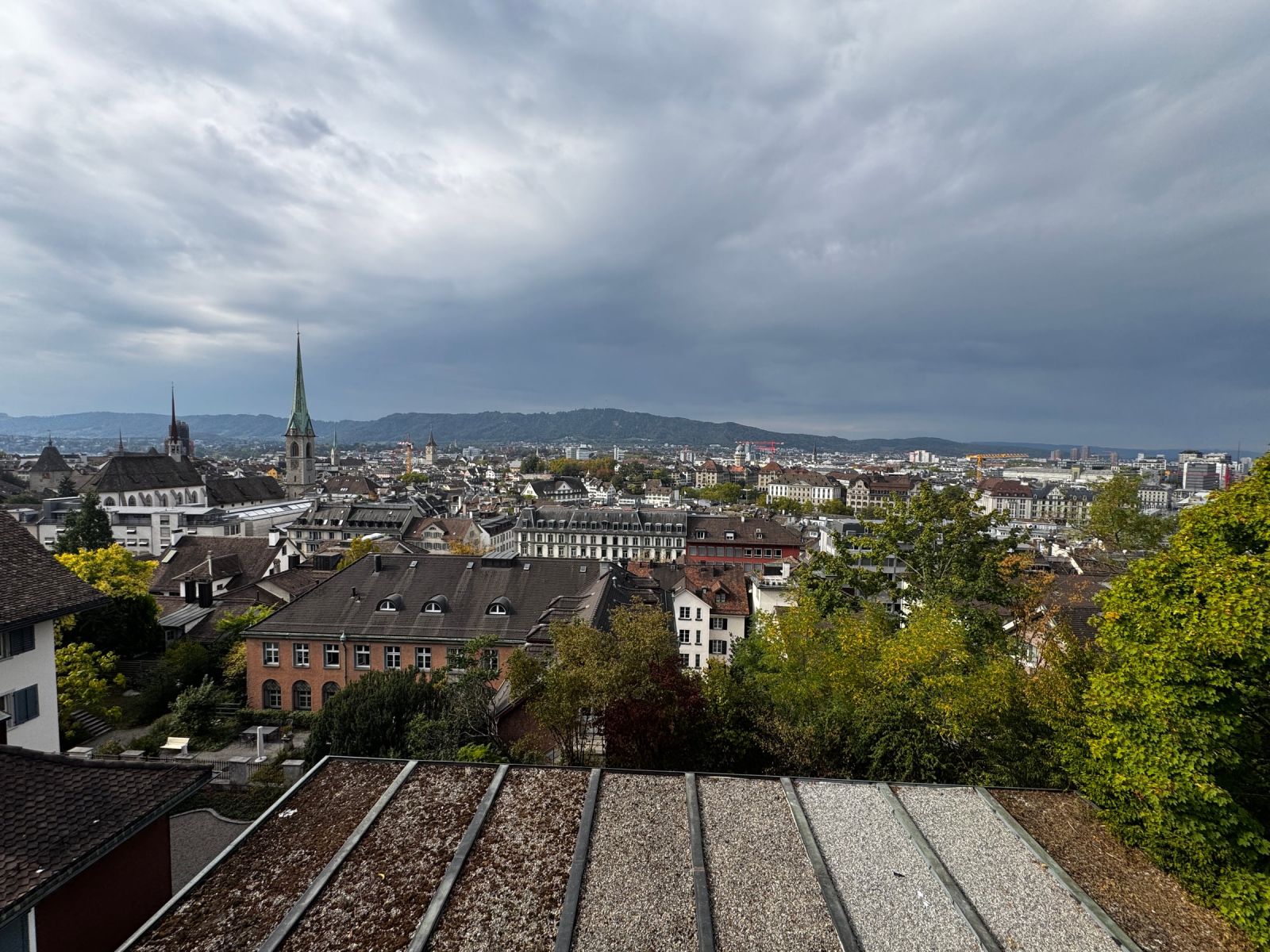
Zurich in a single breath: from the night sky straight into the heart of Switzerland
📍 Zurich – Polyterrasse, the Swiss National Museum and Bahnhofstrasse
👀 352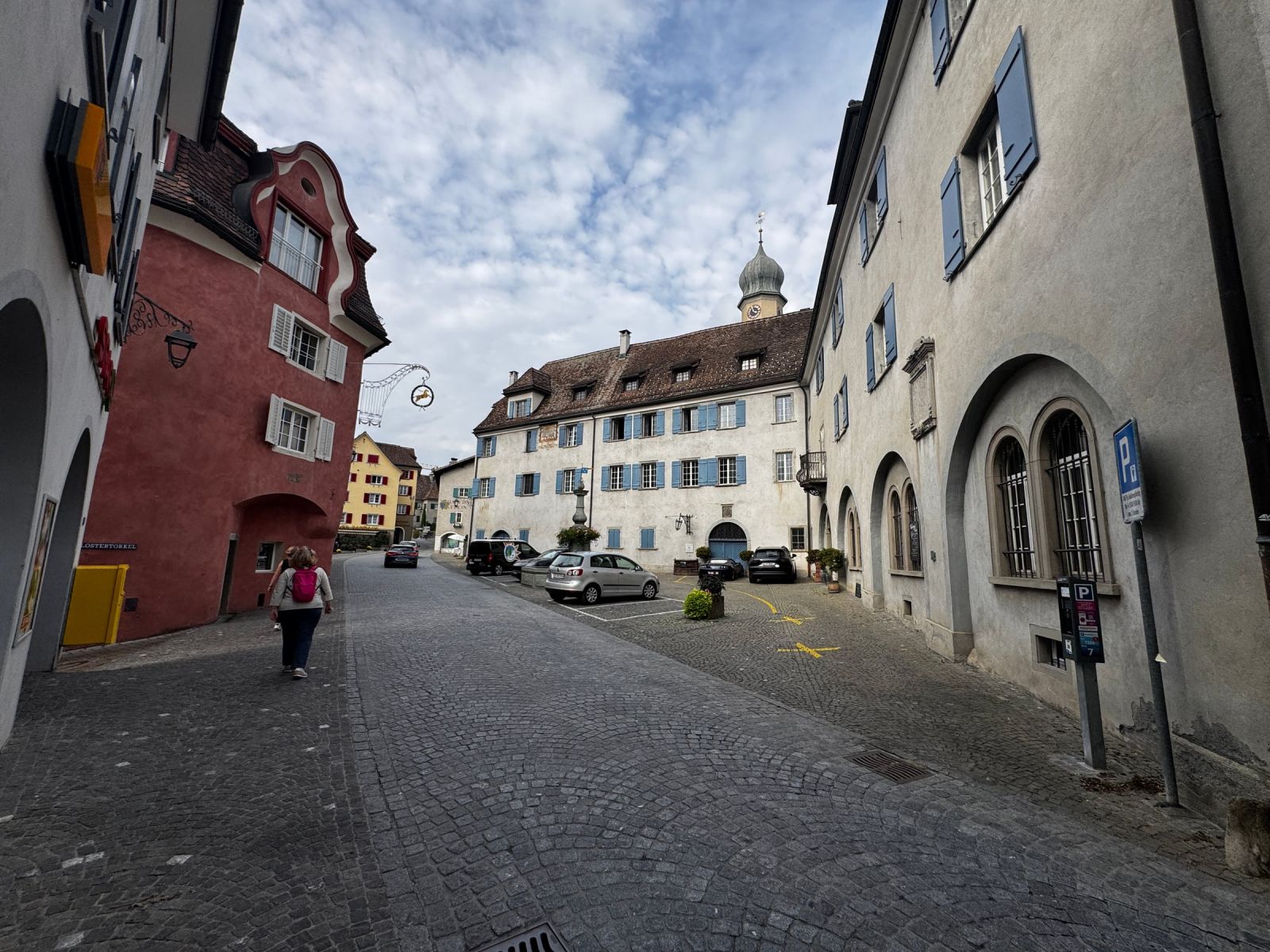
Maienfeld: Where wine matures beneath a beam dating from 1658, and grapes are transported by tractor through the market square
📍 Maienfeld – Salenegg Castle
👀 242
Braunwald: A car-free village where you drive straight into the clouds
📍 Linthal – Braunwald, Canton of Glarus
👀 247
Chur: Switzerland’s oldest town, which welcomes visitors in three languages and serves up a feast under the watchful eye of Calanda
📍 Chur – the Old Town and Cathedral Hill
👀 117
St. Moritz and the Bernina Express: From glaciers to the Italian sun in a single day
📍 St. Moritz – Bernina Express
👀 182